

When Tanya walked into the break room that Wednesday afternoon, she didn’t expect anything unusual to happen.
She made a coffee.
She sat down.
She put her head in her hands.
She was exhausted — emotionally, mentally, physically — the kind of tired you feel in your bones.
She didn’t cry.
She didn’t complain.
She didn’t speak.
She just sat there, silent and shaking.
Another carer, Noor, walked in.
She didn’t say, “Are you okay?”
She didn’t ask what was wrong.
She didn’t try to force a conversation.
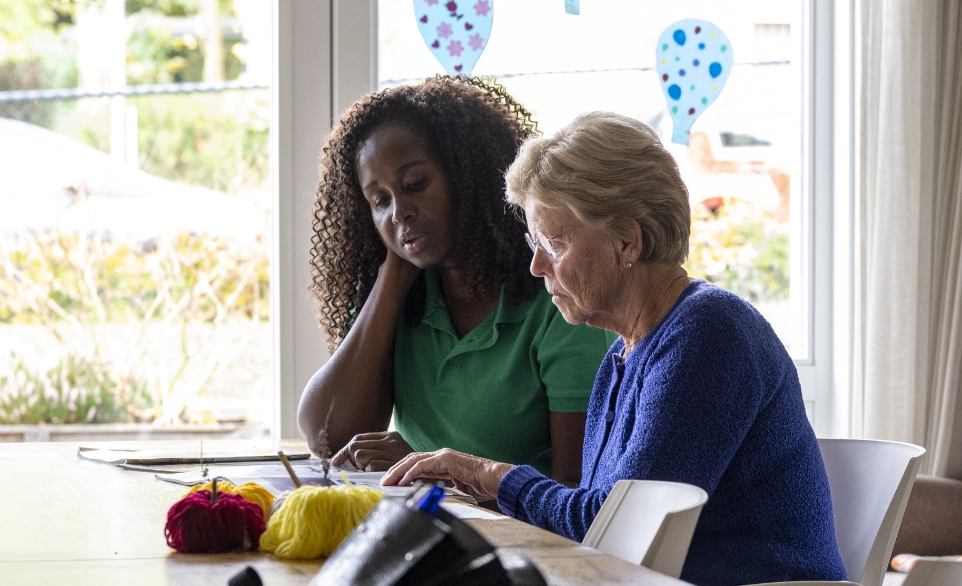
She just sat beside her.
For two full minutes, they sat together in complete silence.
And something in that silence saved Tanya.
Later, she said:
“I didn’t need fixing. I just needed not to be alone.”
That moment between two carers — no training, no management, no structured wellbeing session — was the beginning of a support network that changed her life.
And it’s exactly why peer-community is one of the strongest forms of resilience a carer can have.
Carers Carry More Than Anyone Sees
The care sector is built on invisible emotional labour.
Carers carry:
- grief
- trauma
- distress
- loss
- fear
- loneliness
- guilt
- family conflict
- emotional outbursts
- end-of-life conversations
And most of the time, they carry it alone.
Not because they want to,
but because they think everyone else is “coping better.”
Newsflash:
They’re not.
Every carer is holding something heavy.
Every carer has had a moment like Tanya’s.
Every carer has a breaking point they hide.
This is why peer support isn’t a luxury —
it’s a lifeline.
Why Support Networks Are So Powerful for Carers
Carers don’t just need colleagues.
They need community.
There’s a difference.
A colleague is someone you work with.
A community is someone you survive with.
Support networks help carers:
Feel seen
You realise your emotions aren’t “too much” — they’re normal.
Feel safe
When things get hard, you have people who understand instantly.
Offload without judgment
No need to explain everything — they get it.
Share the emotional weight
You don’t carry everything alone.
Build resilience
Resilience isn’t built in isolation.
It grows through shared experience.
Protect their mental health
Talking is processing.
Processing is healing.
Healing prevents burnout.
Carers are the backbone of society —
and every backbone needs support.
Tanya’s Turning Point: Finding Her People
After that silent moment with Noor, something shifted inside Tanya.
She realised how deeply she needed connection.
Not a formal support group.
Not a manager’s check-in.
Just people who “got it.”
So, she reached out to one colleague she trusted — Elena.
She said something simple:
“Do you want to grab a coffee after shift? I think I just need someone to talk to.”
Elena said yes instantly.
That one coffee turned into a weekly ritual.
Then another colleague joined.
Then two more.
Then it became a small circle of carers who supported each other — at work and outside of it.
That was Tanya’s peer-community.
Built quietly.
Organically.
With honesty and kindness.
And it became the reason she stayed in the job she once thought she’d have to leave.
How Carers Can Build Their Own Peer-Community
You don’t need a formal structure.
You don’t need an official group.
You don’t need a manager’s permission.
Peer-community grows from connection — and can start with just one person.
Here’s how any carer can build it:
-
Start Small — One Person Is Enough
Think of one colleague you feel comfortable with.
Someone who:
- listens
- doesn’t judge
- isn’t competitive
- understands the pressure
Say:
“Do you want to chat after shift? I’ve had a heavy week.”
Connection starts with one brave moment.
-
Create a “No Work Talk Needed” Space
Support doesn’t have to be emotional heavy lifting.
It can be:
- laughing about something small
- sharing a snack
- sitting in silence
- walking to your cars together
- listening to each other’s stories
It’s the presence that matters — not the conversation.
-
Make Micro-Meetups Normal
Carers don’t have long breaks.
So micro-meetups work beautifully:
- 3 minutes in the staff room
- One WhatsApp message
- Two-minute phone call
- A quick voice note
- A shared cup of tea before shift
- Standing outside for air together
Tiny connections.
Big impact.
-
Celebrate the Small Wins Together
Care work is emotionally heavy — but it’s also full of quiet miracles.
Sometimes:
- getting someone to eat after four days
- helping someone smile
- calming someone who was distressed
- finishing a tough shift
- surviving a difficult visit
…is worth celebrating.
Share these moments with your circle.
They are the glue of community.
-
Create Emotional “Check-In” Habits
Nothing complicated.
Ask each other:
- “How’s your heart today?”
- “What was the hardest moment this week?”
- “What made you smile?”
- “What do you need right now?”
Questions that reach deeper than:
“How was your shift?”
-
Don’t Just Share Pain — Share Strength
Peer-community isn’t just about venting.
It’s about:
- reminding each other of your impact
- building each other up
- offering perspective
- sharing coping strategies
- exchanging wisdom
- lifting each other forward
Carers understand carers in ways no one else can.
The Day Tanya’s Group Made Her Strong Again
One Friday, after a brutal week, Tanya almost quit.
She messaged the group:
“I can’t do this anymore. I’m done.”
They didn’t try to persuade her.
Or minimise her feelings.
Or tell her to “be strong.”
They met her at the café at the end of the street — all four of them — within 12 minutes.
No one lectured.
No one preached.
They let her talk.
They held her hand.
They told her stories of their own bad days.
They reminded her of what she’d overcome.
And most importantly:
They reminded her she wasn’t alone.
That was the day she stayed.
Not because the job got easier.
But because her community carried her through the moment she couldn’t carry herself.
If You’re a Carer Reading This and Feeling Alone…
Let me tell you something gently:
You don’t have to be.
You are surrounded by people who understand your life on a level most others never will.
People who cry the same tears.
Carry the same fears.
Feel the same guilt.
Fight the same battles.
Love the same work.
Your people are already around you —
you just haven’t connected yet.
Start small.
Reach out.
Open the door.
Let someone in.
Watch our Playlist on YouTube, and don’t forget to subscribe, so you always have support in your pocket, any time you need it. Follow @bigsisterhomecare for ongoing updates.
Your resilience will grow the moment you stop carrying everything alone.
Your Community Is Your Superpower
Care work is not meant to be walked alone.
Peer-support doesn’t make you weak.
It makes you unbreakable.
The strongest carers in the world aren’t the ones who do everything themselves —
they’re the ones who build networks that hold them when the world gets heavy.
You deserve that kind of support.
You deserve connection.
You deserve community.
You deserve resilience built on relationships that lift you up.
And Big Sister is here to help you build it, grow it, and protect it.
Every step of the way.