

When we think about sustainability, our minds often jump straight to carbon footprints, recycling bins, and electric vehicles. But true sustainability goes far beyond the environmental checklist. It’s about creating lasting, positive change for communities — economic, social, and environmental. And few sectors are as uniquely positioned to do this as home-care.
Across the UK, home-care providers are quietly becoming catalysts for local regeneration — breathing life back into communities, creating stable jobs, and supporting vulnerable individuals in ways that ripple far beyond the walls of their clients’ homes.
As the Care for the Future movement grows, it’s becoming clear that sustainability in care isn’t just about cutting emissions — it’s about rebuilding local ecosystems that thrive.
-
Redefining “Sustainability” in the Context of Care
For years, sustainability in healthcare has focused heavily on carbon reduction and green procurement. While these remain vital, the home-care sector requires a broader lens. Providers operate in local neighbourhoods, rely on community trust, and often employ people who live just streets away from their clients.
That means their impact is local by design. Every job created, every client supported, and every partnership formed contributes to the health and resilience of the surrounding community.
In this way, home-care sustainability becomes a three-pillar approach:
- Environmental: Reducing waste, optimizing travel routes, and sourcing responsibly.
- Social: Creating secure employment, fair wages, and inclusive workplaces.
- Economic: Supporting local supply chains and reinvesting profits into community growth.
It’s the intersection of these three pillars that leads to true local regeneration.
-
The Economic Ripple Effect of Home-Care Jobs
Each new home-care role has a multiplier effect within its community. Studies show that for every one job created in care, up to two additional jobs are supported in related sectors — from local suppliers to transport services and hospitality.
Unlike larger industries that often centralize operations, home-care businesses distribute opportunity. They build teams in towns, villages, and rural areas that might otherwise be economically neglected.
At Big Sister, we’ve seen countless examples of this first-hand. When a Registered Manager opens a home-care business through our 50/50 investment model, it doesn’t just generate income for them — it brings new employment for care staff, coordinators, HR assistants, trainers, and even local cleaners and administrators.
And because many of these businesses are women-led, they also close the gender employment gap, providing flexible, purpose-driven careers that align with family life — an often-overlooked driver of community regeneration.
-
Strengthening the Social Fabric Through Care
While economics matter, regeneration isn’t just about money — it’s about belonging.
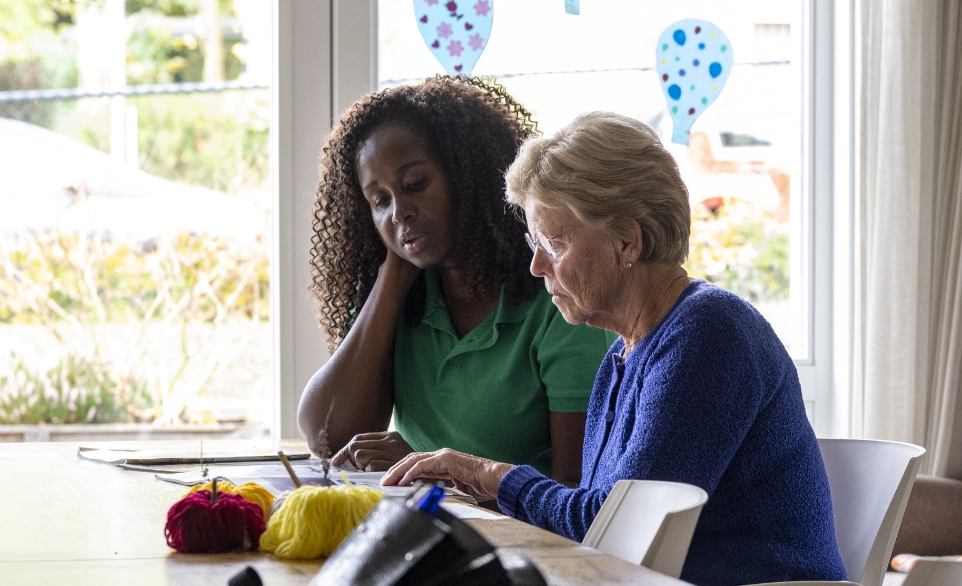
Home-care providers operate in some of the most intimate spaces of human life: homes, families, and neighbourhoods. Their daily presence creates deep social value — building trust, companionship, and stability for those who might otherwise feel isolated or forgotten.
This has a profound effect on community resilience. When individuals are supported to stay safely in their own homes, local networks grow stronger. Carers become connectors — noticing issues, signposting support, and often being the first to spot early signs of physical or mental decline.
Over time, this creates a web of care that extends far beyond the client list. Families, neighbours, and even local councils benefit from reduced pressure on hospitals and social services.
In this sense, home-care providers are not just service deliverers — they’re social infrastructure builders.
-
Investing in People: The Foundation of Regeneration
No regeneration story is complete without a focus on people — and in care, people are the product.
Training, upskilling, and retaining a skilled workforce are at the heart of sustainable growth. Through initiatives like the Carer Academy under the Big Sister brand, care providers gain access to ongoing learning and leadership development. This not only improves care standards but ensures carers see home-care as a career — not just a job.
When carers feel valued and supported, turnover decreases. That means greater continuity for clients, stronger community relationships, and more stable local employment.
Moreover, investing in staff wellbeing — through fair pay, mental health resources, and recognition programs — creates a workforce proud to represent its community. That pride translates into better outcomes for clients and a stronger, more cohesive sense of local identity.
-
Partnering with Local Suppliers to Build Resilience
Every purchase a home-care provider makes can be an act of regeneration.
By choosing local suppliers — from PPE distributors to catering companies and maintenance services — care businesses keep money circulating within their communities. This strengthens local economies and reduces environmental impact through shorter supply chains.
Some forward-thinking providers are even collaborating with nearby colleges, employment agencies, and sustainability groups to create pipelines of opportunity. Whether it’s offering apprenticeships or sponsoring local wellbeing initiatives, these partnerships root the care business deeply within its community ecosystem.
The result is a virtuous circle: the community supports the care provider, and the care provider, in turn, supports the community.
-
Moving Beyond Compliance to Contribution
Historically, sustainability reporting in care has been compliance-driven — ticking boxes for regulators or local authorities. But the new generation of providers is changing the narrative.
They’re viewing sustainability as a competitive advantage and a moral obligation. Businesses that can demonstrate measurable community impact — such as job creation, training programs, or partnerships with local charities — are increasingly favored in government and NHS procurement.
Through the Care for the Future Pledge, Big Sister is helping providers capture and communicate this impact clearly. By measuring metrics like carbon reduction, local employment rates, and social value initiatives, care providers can show buyers and regulators alike that they’re investing in the long-term wellbeing of their communities.
-
Regeneration in Action: A Glimpse of the Future
Imagine a typical high street in 2028.
Where once there were empty shopfronts, now stand training centers for new carers, supported by local colleges. Community cafés double as meeting points for seniors supported by home-care businesses. Electric cars with care provider branding line the street, charged at community-funded green stations.
Local regeneration isn’t a distant dream — it’s already happening, piece by piece, wherever committed care providers plant roots.
By focusing on sustainability with heart, home-care businesses are transforming their role from service providers to community anchors — ensuring that every act of care contributes to a wider cycle of renewal and growth.
-
The Big Sister Vision: Empowering Regenerative Care
At Big Sister, our mission has always been to help care providers succeed — but success for us means more than profit. It means legacy.
Through initiatives like Care for the Future, SisterStaff, and the Founders Circle, we’re equipping care entrepreneurs with the tools, funding, and community they need to lead regeneration in their local areas.
We believe every Registered Manager has the potential to be a changemaker — building a business that not only delivers outstanding care but also lifts their community.
Watch our Care for the Future Playlist on YouTube, and download our brochure, or book a call
Because the future of care isn’t just low-carbon. It’s high-impact — economically, socially, and environmentally.
Final Thoughts
The next chapter of home-care isn’t defined by the number of hours delivered — it’s defined by the impact created.
From revitalizing local economies to empowering carers and clients alike, home-care providers are proving that sustainability can start right at the community level.
When we look beyond carbon, we see something even more powerful: care as a force for regeneration.
Call to Action:
Ready to show how your care business is driving local change?
Join the Care for the Future Network and take the pledge today at www.bigsistercare.com.