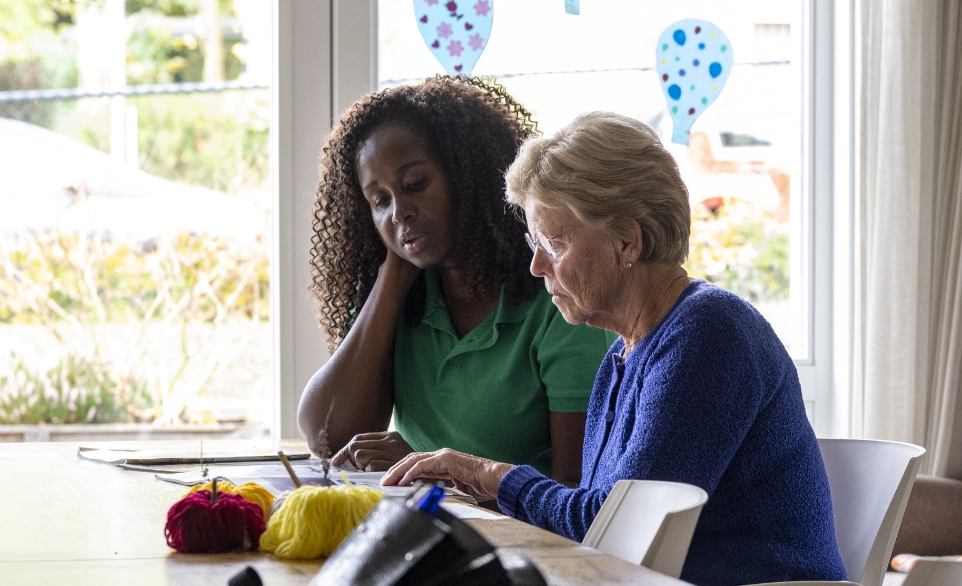


The first time Lily realised she needed emotional boundaries was on a rainy Thursday afternoon, sitting in her car outside a service user’s home, gripping the steering wheel so tightly her knuckles turned white.
She had just finished supporting Mrs. D, a woman with early-stage dementia who used to tell Lily the same story — about her late husband — over and over again.
Today, Mrs. D had looked confused, frightened, and lost.
And Lily absorbed every bit of it.
When she got back in the car, she felt heavy — like she was carrying the emotional weight of two people, not one.
She whispered to herself:
“I don’t know how much more of this I can take.”
That was the moment she realised something had to change.
Because Lily loved caring — she truly did.
But the emotional load was becoming too much.
She wasn’t just supporting service users; she was feeling their pain as if it was her own.
And like so many carers, she didn’t know how to draw the line.
The Emotional Cost of Caring
Carers give more than time.
More than tasks.
More than practical support.
Carers give pieces of their heart every day.
They absorb:
- grief
- loss
- loneliness
- fear
- trauma
- confusion
- frustration
- guilt
- sadness
Even joy — which should feel light — can become emotionally draining when you’re already exhausted.
Empathy is the superpower of the care sector.
But without emotional boundaries, it becomes a burden too heavy for anyone to carry alone.
And this is where the line gets blurry:
You care deeply — but you cannot care at the cost of yourself.
Why Emotional Boundaries Matter So Much
Boundaries aren’t walls.
They’re not coldness.
They’re not detachment.
They’re not selfish.
Boundaries are protection.
They allow carers to:
- stay compassionate without becoming overwhelmed
- support others without drowning in their emotions
- listen without absorbing
- care without collapsing
- be human without breaking
Boundaries protect the heart of the carer, not the hardness.
Lily’s Story: The Day Boundaries Became Essential
A week after that rainy Thursday, something pushed Lily further than she’d ever been pushed.
She arrived for her morning visit with Mr. J, who had advanced Parkinson’s disease. He was trembling, distressed, and struggling to speak.
Lily managed everything calmly — the medications, the reassurance, the practical tasks — but inside, she was overwhelmed.
When she returned to the car, she didn’t cry.
She didn’t break down.
She went numb.
And that scared her more than anything.
She realised:
She hadn’t lost empathy —
she had used it all up.
Her cup was empty.
Her emotional bandwidth was gone.
She was caring until she had nothing left.
That was her turning point.
She booked a meeting with her manager and said something she had never said before:
“I love this job, but it’s taking more from me than I can give. I need help.”
And that moment — quietly brave, deeply honest — changed
everything.
What Building Boundaries Actually Looks Like
Here is what Lily did. These are real actions from a real carer.
No fluff.
No corporate training.
No textbook jargon.
Just real, human boundary-building.
-
She stopped carrying every emotion home
Before:
She would replay every visit in her mind.
She would worry all night.
She carried everyone’s pain like it was her own.
After:
She made a rule:
“Work feelings stay at work.”
When she closed her car door after the last visit, she told herself:
“I did what I could. That is enough.”
And she didn’t let her mind reopen the door later.
-
She created a “mini-transition” ritual
Nothing dramatic.
Just 30 seconds of grounding before starting her next visit.
Her ritual was:
- Sit still
- Hands on lap
- Feet flat on the floor
- One deep breath
And then:
“This is a new moment.”
It separated each emotional experience so they didn’t stack on top of each other.
-
She stopped absorbing guilt that wasn’t hers
Carers often feel guilty for things they can’t control:
- someone’s loneliness
- someone’s pain
- the limits of the service
- the constraints of time
- the realities of illness
Lily reminded herself daily:
“I am not responsible for fixing every part of someone’s life.”
That one sentence gave her emotional freedom.
-
She learned to say one powerful sentence
This changed everything:
“I can help, but I need support with this.”
She practiced saying it calmly, firmly, without justification.
Carers often feel like asking for help is weakness.
It isn’t.
It’s survival.
-
She stopped personalising every emotion
If a service user was upset, before she would think:
- “What did I do wrong?”
- “How can I fix this?”
- “Is this because of me?”
Now she says:
“Their emotion belongs to them. My job is to support, not absorb.”
This is the heart of emotional resilience.
Emotional Boundaries DO NOT Reduce Empathy — They Protect It
Here’s the truth every carer needs to hear:
You are not a machine.
You cannot carry everyone’s emotional world.
And you certainly cannot pour from an empty cup.
Boundaries don’t make you cold.
They make you sustainable.
They make you stable.
Present.
Compassionate.
Capable.
Clear.
Human.
This is how you stay in the care sector long-term without losing yourself along the way.
Watch our Playlist on YouTube, and don’t forget to subscribe to Big Sister here. Follow @bigsisterhomecare for ongoing updates, so you always have support in your pocket, any time you need it.
If You’re a Carer Who Feels Everything Too Deeply…
You’re not too sensitive.
You’re not weak.
You’re not dramatic.
You’re not “overly emotional.”
You’re empathetic.
You’re human.
You’re carrying too much.
And it’s time to share the load.
Start small:
- One emotional boundary today.
- One moment where you don’t take something personally.
- One deep breath between homes.
- One honest conversation with someone you trust.
- One sentence: “I need support with this.”
This is where resilience grows.
Not in silence.
Not in pushing harder.
Not in pretending you’re fine.
In honesty.
In self-respect.
In limits.
In quiet courage.
In emotional boundaries.
Your Heart Is Your Superpower — Boundaries Keep It Beating
Carers like you make the world softer, kinder, safer.
But you’re not here to break yourself in the process.
Your empathy doesn’t need to be smaller.
It just needs to be protected.
And Big Sister is here to help you do exactly that —
with guidance, compassion, and a whole community of carers who understand what it’s really like.
You are strong.
You are caring.
You are human.
And that’s more than enough.