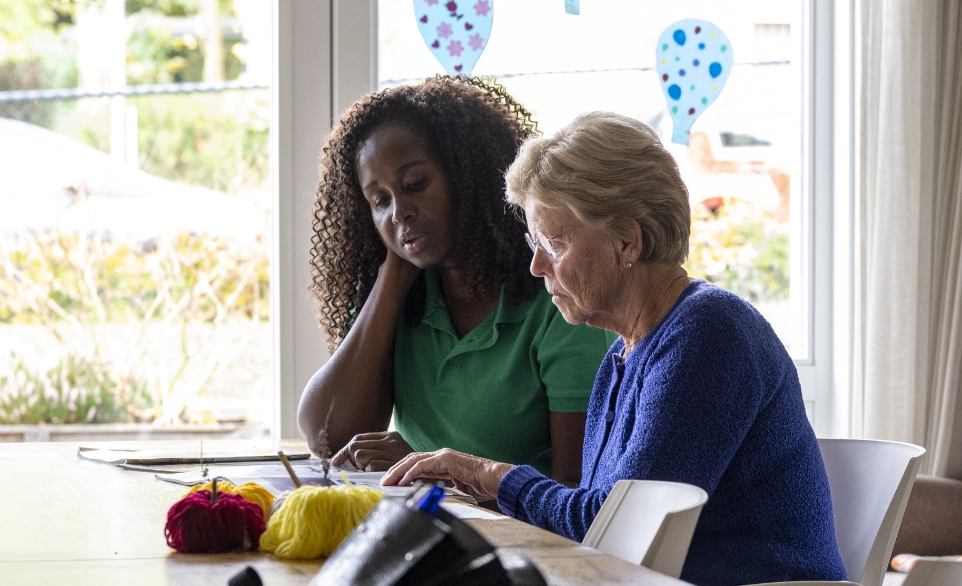


There’s a sentence we hear far too often in the care sector — sometimes said out loud, sometimes whispered in the quiet corners of people’s minds:
“I’m just a carer.”
Just?
As if holding lives together — emotionally, physically, and practically — is something small.
As if walking into someone’s most vulnerable moments and showing up with kindness doesn’t count.
At Big Sister, we want to put a full stop to that sentence.
You are not ‘just’ anything.
You are the backbone of the care system. The quiet hero. The difference between dignity and despair for so many.
And it’s time you got the respect you deserve — from others, yes. But first, from yourself.
-
Let’s Talk About the “Just” Problem
The word “just” is sneaky. It sounds humble, but it’s harmful.
- “I’m just doing my job.”
- “I’m just a support worker.”
- “I’m just helping them get dressed.”
But here’s the truth:
- That job is emotionally complex.
- That title doesn’t capture your impact.
- That task might be the most important part of someone’s day.
When you use the word just, you shrink your role. You tell the world — and yourself — that what you do is less than it is.
And in a society that already undervalues care work, that’s a dangerous message to reinforce.
-
Carers Hold Up the Whole System
Without carers, hospitals would overflow.
Families would collapse under the weight of responsibility.
Vulnerable people would fall through the cracks.
Carers:
- Administer medications
- Spot signs of deterioration
- De-escalate mental health crises
- Offer companionship in isolation
- Maintain hygiene, nutrition, and safety
- Advocate for people when no one else will
In other words?
You keep people alive.
And yet, you’re often the last to be recognised.
It’s not right.
It’s not fair.
And we’re here to say: you don’t need to wait for others to validate your worth. You can start by reclaiming it yourself.
-
You Have Complex Skills (Even If You Don’t Have a Degree)
One of the biggest lies in the professional world is that value is only tied to qualifications.
But in care, we know better.
Your skills include:
- Emotional regulation under stress
- Conflict resolution
- Time management
- Crisis response
- Deep listening
- Cultural sensitivity
- Risk assessment
- Record keeping
- Medical knowledge
- Safeguarding practices
If you worked in a corporate environment, this skillset would have a fancy title and a six-figure salary.
So, the next time someone implies care work is “easy” or “low-skilled”?
Smile and know better.
You’re running an orchestra of responsibilities every single shift — and making it look effortless.
-
The Emotional Labour Is Real (and Often Invisible)
Carers don’t clock out emotionally.
Even off-shift, your mind might be with a service user who’s struggling.
You might carry the weight of grief after someone passes.
You might shoulder trauma no one sees.
That kind of emotional labour is real work — and it deserves acknowledgement.
At Big Sister, we teach carers how to name what they’re carrying. Because when you name it, you can start to respect your own energy and set healthy boundaries.
-
Respect Starts with How You Talk About Yourself
Here’s a challenge:
Over the next week, listen to how you describe your job.
- Do you downplay it?
- Do you joke about “just being a bum wiper”?
- Do you avoid talking about the emotional toll?
Now imagine if you described it differently:
“I help people live with dignity.”
“I’m trained to support vulnerable individuals through complex needs.”
“I provide frontline healthcare and emotional support to those who need it most.”
That’s not arrogance — that’s accuracy.
When you speak about your role with pride, others begin to view it differently, too.
-
Demand Better — From Employers, Clients, and Society
It’s not your job to fix broken systems. But you can set standards for how you’re treated.
That might look like:
- Asking for fair pay
- Refusing to tolerate disrespect from clients or families
- Advocating for proper training and PPE
- Setting healthy boundaries with colleagues
- Challenging harmful stereotypes in casual conversation
Respect isn’t just a feeling. It’s a culture. And it starts with brave voices like yours saying, “Actually, this matters.”
-
Big Sister Is Here to Help You Reclaim Your Power
At Big Sister, we’ve worked with thousands of carers who thought they were “just” something. Now they run care businesses, lead teams, and mentor others.
That transformation didn’t happen overnight.
It happened the moment they started seeing themselves differently.
We support carers through:
- Training to elevate your leadership mindset
- Free resources via @bigsistercare on YouTube
- Community to remind you you’re not alone
- Resilience coaching so you don’t burn out
You are the face of care. And we’re here to help you own that title — unapologetically.
-
A Final Word: You Deserve the Spotlight
Let’s stop apologising for care work.
Let’s stop whispering when we should be shouting.
Let’s stop saying “just” when we really mean “essential.”
You are a leader.
You are a lifeline.
You are not “just” a carer.
You are a force — and the world is better because of you.
Ready to start owning your worth?
- Follow us on @bigsistercare YouTube
- Subscribe to the Resilient Carers blog
- Tag a fellow carer who needs this reminder today